
Inclave casino Plinko
Introduction
I look at Plinko a little differently from the way it is usually presented on casino pages. At first glance, it seems almost too simple to deserve a serious review: you choose a stake, set a risk level, drop a ball, and watch it bounce through a field of pegs until it lands in a payout slot. That simplicity is exactly why the format works. In practice, Inclave casino Plinko is not just a lightweight arcade-style distraction. It is a fast, probability-driven casino game built around visible randomness, adjustable risk, and a session rhythm that can feel calm one minute and brutally swingy the next.
For UK players, that matters. A lot of casino games hide their logic behind reels, symbols, bonus rounds, and long paytables. Plinko does the opposite. It puts the core event in front of you. You see the drop. You see the path. You see the result. But the visual clarity can be misleading if you do not understand what is really happening underneath. The board looks transparent. The outcome distribution is not.
In this review, I will stay focused on what players actually need to know before launching Plinko at Inclave casino: how the mechanic works, why the pace can become intense very quickly, where the real risk sits, how payout patterns are structured, and who is likely to enjoy this format. My main point is simple: Plinko is easy to enter, but it rewards players who understand its logic before they start chasing the outer multipliers.
What Plinko is and why it draws so much attention
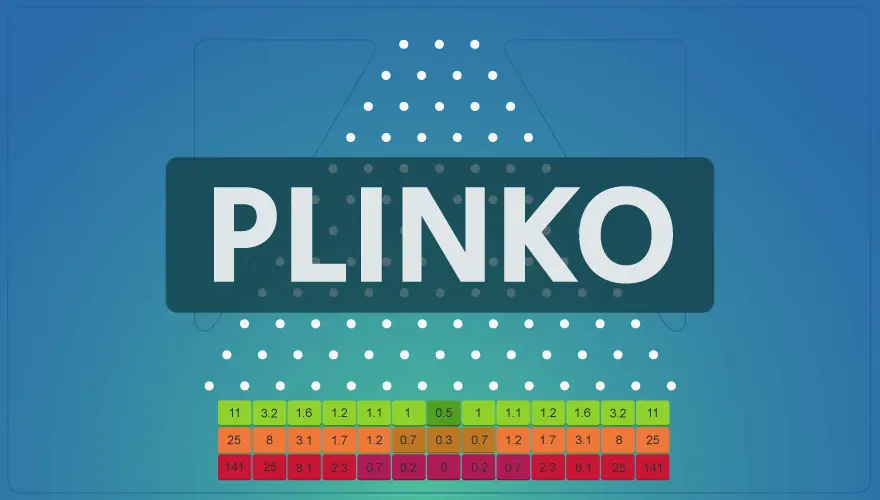
Plinko is a casino game built around a vertical board filled with pins or pegs. A ball drops from the top, collides with obstacles on the way down, and eventually lands in one of several prize zones at the bottom. Each zone corresponds to a multiplier. Lower multipliers usually sit near the centre, while the highest ones are typically placed at the far edges.
The reason this format has become so noticeable is not just that it is easy to understand. It is that it turns randomness into a visible event. In a slot, a player sees reels stop. In Plinko, a player watches uncertainty unfold in motion. That difference is more important than it sounds. The ball appears to “choose” a route, and even though the result is still governed by the game’s random system, the animation creates a stronger sense of involvement than many conventional instant-win formats.
There is another reason Plinko stands out: the game compresses anticipation into a few seconds. A full cycle is short. You place a bet, release the ball, and get a result almost immediately. That creates a quick feedback loop. For some players, this is the main attraction. For others, it is exactly where caution is needed, because a fast cycle can make bankroll movement feel lighter than it really is.
One of the most interesting things about Plinko is that it looks less aggressive than it often is. There are no flashing wilds, no dramatic bonus countdowns, no complex reel modifiers. Yet a high-risk setup can produce a harsher session than many slots. The soft visual style hides a very sharp variance profile.
How the Plinko mechanic actually works
At a practical level, the mechanic is built from a few core variables: bet size, number of rows, risk level, and the payout map at the bottom of the board. Different versions of Plinko may present these settings in slightly different ways, but the underlying logic is usually similar.
When I assess a Plinko version, I pay attention to one thing first: how the board is configured. The number of rows affects how many directional decisions happen during the drop. More rows generally mean a longer path and a wider distribution of possible outcomes. The ball can bounce left or right at each contact point, and over many rounds this creates a pattern where central landing zones are hit more often than the extreme edges.
That is why the biggest multipliers sit on the outside. They are harder to reach. The game is not “trying” to avoid paying them; they are simply attached to lower-probability end positions. The centre pays less because it is visited more often. The edges pay more because they are visited less often. This is the core mathematical trade-off behind Plinko, and players should understand it before reading too much into individual drops.
Risk level changes how sharply the payout table is distributed. On lower risk, the board tends to produce more modest and more frequent returns. On higher risk, the central outcomes often become less rewarding, while the outer values become more dramatic. In plain English, the game shifts from “more small landings, fewer shocks” to “many low returns, occasional spikes.”
| Element | What it changes | What it means in practice |
|---|---|---|
| Bet size | Monetary value of each drop | Directly affects bankroll speed and emotional pressure during a session |
| Rows | Length and spread of the ball’s route | Can widen outcome distribution and alter how often edge zones are reached |
| Risk level | Payout profile across the board | Changes whether the session feels steadier or more volatile |
| Multiplier layout | Value of each landing slot | Defines where the realistic returns sit and where the rare headline results are |
A useful way to think about Plinko is this: the animation shows the route, but the session is defined by the distribution. If you focus only on the path of one ball, the game can feel emotional and personal. If you look at 100 drops, the real structure becomes clearer. Most outcomes cluster around the middle. The excitement comes from the possibility that one drop breaks away from that pattern.
Why the game feels engaging and how its session tempo develops
Plinko creates engagement through rhythm more than through content depth. Slots often rely on layered features, symbol interactions, and bonus rounds to hold attention. Plinko relies on pace, tension, and repeatability. Every round is short, but not empty. There is a brief build-up, a visible journey, and a clean result. That structure is efficient.
At Inclave casino, this style can appeal to players who do not want to spend time learning a heavy rule set. You can understand the interface in seconds. The real challenge is not learning how to play. It is learning how the session behaves after ten, twenty, or fifty drops.
The tempo is shaped by three things: Mobile players should have a look at Inclave Casino registration for UK players before installing anything.
- Round duration. Each drop resolves quickly, so decisions repeat fast.
- Near-miss psychology. A ball that approaches a high multiplier before bouncing away can feel more dramatic than a standard losing spin in a slot.
- Risk configuration. The same board can feel relaxed or punishing depending on the selected risk setting.
This is where Plinko becomes more interesting than it first appears. The game does not need a bonus feature to create suspense. The suspense comes from trajectory. Watching a ball flirt with an outer multiplier produces a specific kind of tension: it feels close enough to imagine, but still rare enough to remain elusive. That balance is a big part of the format’s appeal.
One observation I keep returning to is that Plinko often feels faster than its own interface suggests. Because the board is static and the action is simple, players may underestimate how many paid rounds they can complete in a short time. It is one of those formats where a “quick look” can quietly become a long session.
How risky Plinko really is and who tends to enjoy it
Plinko can be relatively mild or sharply aggressive depending on the setup, so it makes little sense to label the format as universally low-risk or high-risk. What matters is how the board is configured and what the player expects from the session.
If you choose a lower risk mode, you will generally see more frequent middling outcomes. That does not mean steady profit, and it certainly does not remove house edge. It simply means the path of the bankroll may feel less violent over short stretches. If you switch to high risk, the game often becomes a hunt for occasional large multipliers while many drops return little or nothing of note. That is where session management becomes essential.
In practical terms, Plinko tends to suit players who:
- prefer short rounds and immediate outcomes;
- enjoy visible randomness rather than reel-based presentation;
- understand that rare high multipliers can come with long dry stretches;
- are comfortable setting their own pace and stopping points.
It may be a poor fit for players who want extended bonus rounds, narrative themes, symbol combinations, or a slower entertainment arc. If someone enjoys slots because of progression, feature variety, or audiovisual immersion, Plinko can feel too stripped back. The opposite is also true: players who find many slots cluttered may appreciate how direct this format is.
A second observation worth remembering is that Plinko can produce a stronger illusion of control than many games, simply because you choose risk level and sometimes board depth. Those choices matter, but they do not turn the game into a skill-based product. They shape the distribution of outcomes; they do not let you steer individual drops.
What players should understand about probabilities, outcomes, and session logic
The most important thing to understand before playing Plinko is that the most visually exciting parts of the board are usually the least likely to be reached. This sounds obvious, but many players still react to the layout emotionally rather than mathematically. Seeing a 100x or 1000x multiplier on the edge creates a strong focal point. The board invites attention toward the rarest event.
In reality, most of the session is usually decided by the central and near-central slots. Those are the outcomes that shape bankroll behaviour over time. The edge multipliers define upside, but the middle of the board defines the day-to-day experience.
That has a few direct consequences:
- Short-term results can be misleading. A few strong landings early on can make the format look softer than it is.
- High multipliers are not a realistic baseline. They are the exception that gives the board its identity.
- Session length changes perception. The longer you play, the more the underlying distribution tends to reveal itself.
Players should also separate two ideas that are often blurred together: visible randomness and predictable expectation. Each drop is uncertain. Over many drops, the board still follows a structured payout profile. That is why Plinko can feel chaotic in the moment but repetitive in longer samples. The chaos is local. The pattern is statistical.
A third observation that makes Plinko different from many first impressions: the game often feels fairest when it is least generous. Because the board makes the route visible, players can accept a low result more easily than they accept an opaque slot outcome. The transparency of the animation softens frustration, even though the math is not necessarily kinder.
How Plinko differs from slots and other casino games
The cleanest comparison is with online slots, because that is where many players arrive from. Both formats are chance-based and designed around repeated stakes, but the experience is very different.
| Format | Main driver of excitement | Typical player experience |
|---|---|---|
| Plinko | Trajectory, distribution, risk selection | Fast, minimalist, highly session-driven |
| Classic slots | Reels, symbols, features, bonus rounds | More layered, theme-led, often slower in emotional build-up |
| Roulette | Single-event betting on a wheel result | Clear odds structure, less animated path to the outcome |
| Crash-style games | Timing a cash-out before a loss event | More decision-focused, stronger illusion of tactical play |
Compared with slots, Plinko removes almost all decorative complexity. There are no paylines to track, no symbol hierarchy to learn, and usually no special rounds interrupting the core loop. That makes it easier to read, but also more exposed. A slot can hide a rough patch inside a long feature drought. Plinko shows the rough patch directly, drop by drop.
Compared with roulette, Plinko offers more visual drama between stake and result. Compared with Inclave Casino crash games details before claiming bonuses or depositing, it asks less from the player in terms of timing decisions. You set conditions, then observe. For some, that is a strength. For others, it reduces the sense of agency.
What Plinko does especially well is compress the casino experience into a very legible form. If slots are about layered entertainment systems, Plinko is about concentrated probability.
Practical strengths and weak points of the format
Plinko has genuine strengths, but they are not universal advantages. They depend on what the player values.
Strong points:
- Immediate clarity. The barrier to entry is low. You can understand the basic loop almost instantly.
- Visible outcome logic. The route of the ball creates a stronger sense of transparency than many reel-based products.
- Flexible session style. Risk settings can make the same game feel more conservative or more aggressive.
- Fast resolution. Good for players who want quick rounds without feature-heavy interruptions.
Limitations and friction points:
- Repetition arrives quickly. If a player needs variety, Plinko can feel narrow after a while.
- High-risk setups can burn through a bankroll fast. The simplicity of the interface does not reduce financial pressure.
- Big multipliers can distort expectations. They are highly visible and emotionally powerful, but not representative of the average session.
- Limited thematic depth. Players who want atmosphere, characters, or evolving features may lose interest.
In my view, the biggest strength of Inclave casino Plinko is honesty of structure. The biggest weakness is that many players mistake that honesty for softness. The game tells you what it is. The danger lies in assuming that a simple board means a gentle experience.
What to check before starting a Plinko session
Before launching Plinko, I recommend paying attention to a few practical details rather than jumping straight into higher multipliers. Those comparing loyalty perks can weigh this section against Inclave Casino free spins and account details.
- Review the risk mode first. Do not treat this as a cosmetic setting. It changes the character of the session.
- Look at the payout spread. Identify where the realistic outcomes sit, not just the headline numbers on the edges.
- Set a drop budget. Because rounds are short, it is smarter to think in number of drops as well as money.
- Use demo play if available. It helps you understand rhythm and distribution without immediate financial pressure.
- Decide what you want from the session. If you want long-form entertainment, Plinko may not be the best fit. If you want quick, clean action, it may suit you well.
This is also the point where discipline matters more than intuition. A few unusual drops can make the board look “hot” or “due,” but Plinko does not become more beatable because a previous ball went left or right. The visual nature of the format encourages pattern-seeking. Players should resist that impulse.
Final verdict on Inclave casino Plinko
Inclave casino Plinko offers a very specific kind of casino experience: fast, stripped back, visually transparent, and heavily shaped by risk selection. What it really gives the player is not complexity, but concentration. The format takes chance, compresses it into a short visible event, and lets the tension come from the distribution of outcomes rather than from layered features.
Its key strengths are clear. It is easy to understand, quick to play, and unusually direct in the way it presents uncertainty. It can be engaging even without bonus rounds because the path of each drop creates its own miniature suspense. For players who like concise, high-feedback casino games, that is a real advantage.
The caution point is just as clear. Plinko may look harmless, but depending on the risk level it can be a sharp variance product. The biggest multipliers are part of the appeal, yet they should not define expectations. Most sessions are shaped by ordinary landings in the middle of the board, not by rare edge results.
So, is it worth trying? If you want a game with quick rounds, visible randomness, and a clean interface, yes, Plinko is absolutely worth a look. If you prefer feature-rich slots, slower narrative build-up, or a stronger sense of progression, it may feel too lean. That is the honest answer. Plinko is not for everyone, but for the right player it delivers a focused and very readable form of casino tension.
FAQ
How does Plinko work right after the ball drop starts?
A stake is selected, then the ball drops through the pegs and lands in a payout zone. The multiplier tied to the landing slot determines the round result. Each round is resolved when the ball settles.
What should be checked before pressing the Plinko start button for real-money play?
Check that real-money mode is active and that the selected stake matches the intended session budget. Confirm the bet amount is correctly displayed, since Plinko rounds repeat quickly. Also ensure the page is fully loaded before starting the next ball.
Does Plinko behave differently in demo mode compared to real-money play?
Demo mode uses simulated balance and does not affect withdrawals. The game mechanics and multiplier outcomes follow the same Plinko rules, so it is suitable for practicing timing and risk level. Any demo session ends without changing account funds.
How does login state affect access to Plinko real-money play?
Real-money play requires an active casino account session. If the account is not signed in, the game may open in a limited mode or request authentication before enabling stakes. Confirm the account status and try launching Plinko again.